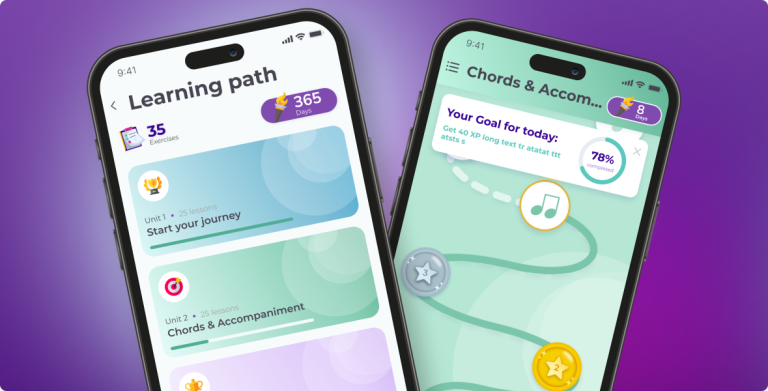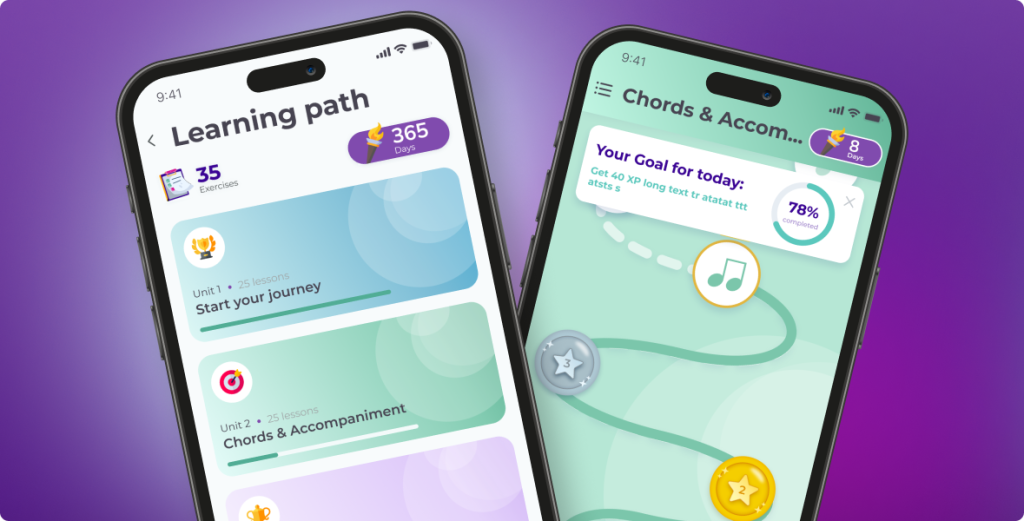
It means that hybrid learning is not a fashionable novelty but a consciously worked-out model that takes the best features of both traditional lessons and independent practice. This format is of particular relevance in teaching music, where theory is inextricably linked with performance technique. Because one can achieve sustainable progress only by combining regular meetings with the teacher with daily attention to the instrument. This is hybrid learning powered by a teacher plus app flow such as the Talented app, where weekly lessons anchor daily practice for consistent growth (check it out).
Characteristics of hybrid learning include
- A mix of live interaction with a mentor and independent exercises.
- Continuous feedback is provided to correct mistakes and deepen knowledge.
- Support through alternation of motivational lessons.
- Flexible scheduling, personalized according to each participant’s goals and abilities.
Musically, there is no way one can just limit themselves to mere theory or practice. Instead, what is offered is a coordinated approach: every week, a lesson forms a cornerstone, while daily practice helps to consolidate what has been learned and furthers the development of mastery. This model thrives on teacher-app synergy, lesson reinforcement, and routine consistency inside a hybrid curriculum.

Characteristics of the Talented Format of Weekly Lessons
Weekly lessons are the foundation on which further learning is built. On our platform, these lessons are structured in such a manner to maximize efficiency, focusing on the following:
- Error Analysis: Mistakes made during the practice of the week are reviewed here, which enables addressing issues from an early stage.
- Learning new techniques and theory: New musical concepts are adapted to the level of the student and integrated into each session.
- A tailored plan: The teacher then prepares the program based on progress and difficulties.
- Questions and answers: the ability to discuss problems and receive advice in real-time.
| Lesson component | Description | Time, min |
| Homework review | Detailed analysis and error correction | 15 |
| New theory and practice | Teaching new techniques and skills | 20 |
| Feedback | Answers to questions and recommendations | 10 |
| Planning | Setting tasks for the next week | 5 |
By the structured approach, each lesson avoids a loss of value, ensuring that development continuously happens. Flexible, one stays with this format; if there is a need for emphasis to be shifted to either playing technique or understanding melodic structures, it can easily be done. Here, weekly lessons pair with app drills, teacher feedback, and progress mapping to keep student engagement high.
The Role of Daily Practice — How to Consolidate Knowledge and Skills
Daily practice is an integral part of learning in the hybrid model at Talented. If the material studied is not repeated and applied constantly, knowledge will very quickly lose its relevance, and skills will become less confident. For this reason, daily practice has a leading role in how educational material is consolidated.
The main functions of daily practice:
- Reinforcement of theoretical base: The concepts are understood and remembered better by repetitions and the application of the learned material.
- Skill development: During the systematic completions of tasks and exercises, the skills are brought to a level of automatism.
- Feedback: The idea behind this is that with practice, one should be in a good position to keep better track of their progress and note where the gaps are, for follow-up adjustment in the learning course.
- Motivation and discipline: A daily engagement habit forms study discipline, hence improving overall involvement.
It is not just important to spend time performing routine tasks, but to study consciously, setting a concrete goal for every day. In Talented, different formats are used in daily practice: interactive tests, case studies, projects, group work, and individual exercises. Such diversity helps to sustain interest and deepens the absorption of material. This ensures practice continuity, practice logging, and clear progress logs that support accountability tools.
Synergy of Theory and Practice — Advantages of the Combined Approach
Only in the integration of theoretical knowledge with practice is the effectiveness of learning maximized. Based on the principle of complementarity between weekly lessons and constant practice, Talented’s hybrid format ensures holistic perception and development of students.
Key advantages of this approach:
- Better quality of material assimilation
It is felt more as a conscious process when theory is inculcated with daily practice, rather than mechanical memorization, and knowledge then turns out to be more stable and applicable. - Formation of practical skills
The learner does not just become acquainted with information but also gains skills through acting and solving of problems in real situations, which substantially enhances professional training. - Greater motivation to learn
Visible results from regular exercises and the opportunity to immediately apply new knowledge inspire continuation and growth. - Flexibility of the learning process
Combining formats provides an opportunity to tailor education to individual preferences and pace, thereby affecting success positively.
Consequently, combining theory and practice in Talented will create a high-quality educational space where students, while receiving knowledge, will also learn to think, apply, and perfect themselves. This synergy forms the very foundation of dynamic and productive learning — the essence of teacher plus app design and curriculum blend with strong skill carryover.
Organization of the Learning Process — Effective Time Management
A key success factor in hybrid learning is rational time planning. The hybrid model of Talented combines weekly sessions with daily practice in such a unique manner, whereby productive learning is enabled with no excessive overload.
Recommendations to maximize efficiency:
- Prioritizing: Emphasize what the most important learning tasks are for this week according to the course program. This helps focus efforts on the most important topics while leaving room to practice skills.
- Creating a flexible schedule: Daily practice needs to become part of the rhythm in daily life, but always considering the timetable each one has. At least 30 minutes a day need to be devoted to reviewing and solidifying what one has learned. This time can be taken from morning hours before work or studies, evening hours, or even short breaks throughout the day.
- Sessions divided into blocks: Practice has shown that breaking learning material into small blocks improves retention and helps avoid overload. Focusing on a particular aspect of a topic one day and on practical tasks the next, for example, is effective.
- Utilize planners and reminders: Digital or paper planners, together with automated reminders, contribute to keeping one disciplined and never skipping an important session. These tools support progress monitoring and returning promptly at difficult points.
- Analysis and adjustment: Such periodic self-management of the learning process allows for the required schedule adjustments. It pays to evaluate which days and times are most productive to study and adjust session intensities appropriately.
Not just the amount of time, but also the quality distribution of efforts determines the effectiveness of learning. Talented practices an individual approach, allowing each student to independently build an optimal regime with regard to their capabilities and goals. Thus, structuring the learning process in such a way that daily practice reinforces and supplements the results of the weekly lessons is quite achievable with proper time management and discipline. It is this balance, embedded in the Talented app system, that helps achieve confident and steady progress. Expect stronger lesson scheduling and progress mapping throughout.
Conclusion — Why Hybrid Learning Is the Best Format for Modern Education
Not just the fad of today, but a very significant learning strategy, hybrid learning combines weekly lessons with daily practice. This format is highly in demand and increasingly effective in the conditions of the rapid change of the educational environment — why?
First of all, the combination of theory and practice ensures deep comprehension of the material. Talented’s lessons come once a week and introduce new knowledge in structured theoretical form; daily practice helps consolidate it and apply it to real-life tasks. The combination:
- stimulates active thinking,
- develops independent problem-solving skills,
- raises motivation levels, since progress becomes visible day after day.
Hybrid learning enables adjustments to individual learner characteristics. Each student gets the opportunity to adjust the intensity and format of lessons to their comfort level, improving efficiency in information absorption.
Organizational advantages are also important to note:
- Flexibility in scheduling allows for a harmonious balance in study and other life and professional commitments.
- Constant practice forms helpful habits and discipline.
- Teachers’ feedback, which is done through ongoing observations, enables timely adjustments in the teaching and learning process.
Finally, Talented students’ feedback confirms that stable and impressive results are achieved precisely owing to this approach. Many say that hybrid learning not only contributes to successful mastery of the material but also increases self-confidence, which is a decisive factor in any educational undertaking. Thus, hybrid learning is not just a method, but an integrated system responding to the demands of the contemporary world. Through it, each studied topic transforms from a collection of dry facts into a vivid experience applicable in many life spheres — a clear case for hybrid learning enhanced by teacher plus app orchestration inside the Talented app, anchored by weekly lessons and sustained through daily practice.